
In India, marriage is not only a personal and cultural institution, but it is also strictly governed by legislation. Over the years, the government has made laws to protect people from getting married too young, encourage education, and make sure people are physically and mentally ready for marriage before they take on the duties of being married. Families, young adults, and anyone who is going to get married need to know these laws. This article clearly and practically discusses the rules, reasons, and effects of legal age for marriage in India .
The Concept Of Legal Marriage Age In India
Indian marriage laws aim to strike a balance between traditional customs and new legal protections, with personal regulations often differing among groups; civil law usually sets minimum ages that apply across religions for marriage – this helps stop child marriage, reduce health risks and enable individuals to make intelligent choices about their futures. People often want to know what is the legal age for marriage in India. The answer varies depending on the gender of the people who want to get married. The Prohibition of Child Marriage Act, 2006, and other personal legislation set these age limits.
Legal Age For Girls In India
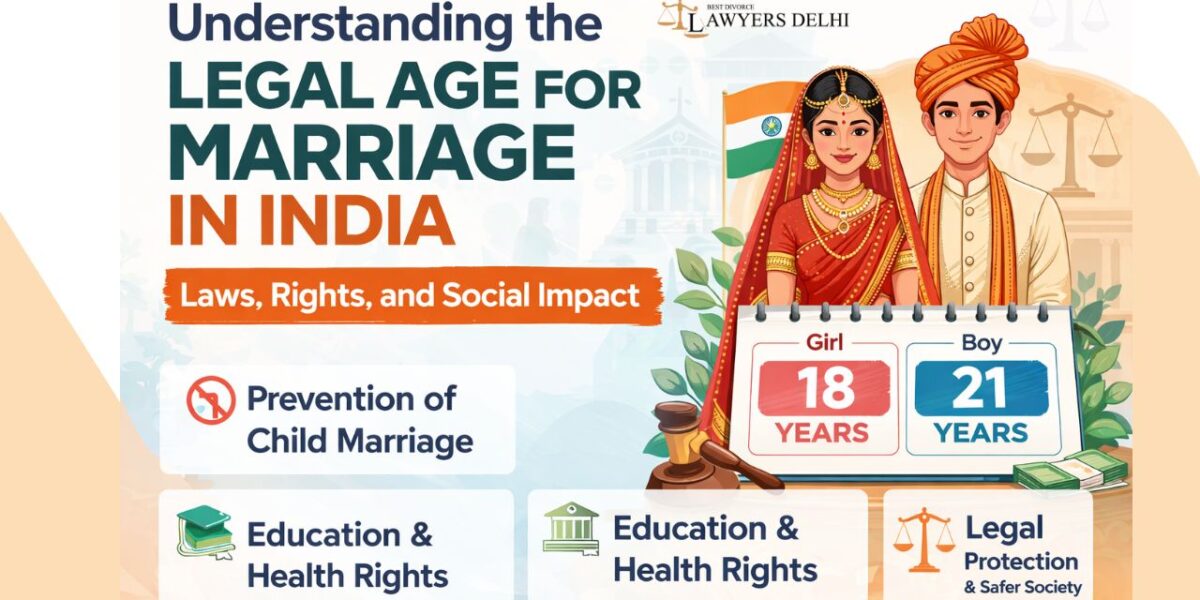
Under current law, the legal age for marriage in India for girl is 18 years. This regulation applies to all communities and is meant to make sure that females can finish school and become physically and mentally mature before getting married. Historically, early marriage has had a bigger impact on girls than on boys. It has often made it harder for girls to get an education and a job, and it has also increased the health risks of getting pregnant too soon. The law sets the minimum age at 18 to protect the rights of young women and encourage gender equality in social and economic involvement.
Legal Age For Boys In India
In India, the legal age for marriage in India for boy is 21 years old. The higher age limit acknowledges the belief that males should achieve emotional, financial, and social maturity prior to undertaking marital duties. There has been much disagreement surrounding India’s differing age requirements for marriage; while some wish they were equalized and others wish for differences; nonetheless, Indian law stipulates that men must be 21 or over prior to getting married.
Marriage Age For Both Genders Together
When individuals talk about marriage laws in general, they often use the legal age for marriage in India for girl and boy to show how the law sees couples as a unit. To put it simply, the bride must be at least 18 and the groom must be at least 21 when they get married. If either person is not of the right age, the marriage may be voidable, and anyone who helped it happen, such as parents, guardians, or priests, may face legal repercussions.
Legal Age And Court Marriage In India
The Special Marriage Act of 1954 lets people from various religions or backgrounds get married in a civil way. The legal age for court marriage in India is the same as for conventional marriage: 18 for women and 21 for men. To get married in court, you have to show documentation of your age, identification, and where you live. This means that age verification is a strict aspect of the process. This makes sure that both parties are following the law and gives them further legal protection.
Why Legal Marriage Age Matters?
Minimum marriage ages have a purpose. They align with larger social goals such as decreasing maternal deaths, raising literacy rates among adults, and giving young people greater power over their lives and decisions about them. Delay in marrying can bring improved health benefits, employment prospects and stronger family structures. The legal age for girl marriage in India is very significant for solving social problems like kids dropping out of school and people relying on others for money. The law encourages families to put education and personal growth first by setting this age limit.
Legal Consequences Of Underage Marriage
Marriages that take place below legal age aren’t automatically invalid, but can be voided at the individual’s discretion; that means when they turn 18, they can request annulment and ask to get divorced again. Also, anyone planning, conducting or advocating child weddings could face fines or jail terms; these policies aim to send out a warning and show just how serious these rules can be taken.
Social Awareness And Changing Perspectives
Even though regulations regarding marriage age limits are clear, people in different parts of the country still may be confused as to their age limits for marriage. Unfortunately, families often break them due to cultural norms or financial pressure; more education programs and legal outreach have begun having an effect. Urbanisation, improved educational access and female workforce engagement have all played a part in creating an increase in delayed marriages. Knowledge of law helps individuals assert their rights and make wise choices for the future.
Ongoing Discussions And Reforms
Recent policy discussions regarding changing regulations that dictate marriage ages to be equal between men and women have surfaced at both policy levels. Proponents argue that having equal age limits for both sexes will foster gender equality more fully while critics contend legal changes must coincide with sociological shifts as soon as they take place; regardless of future changes however it remains essential that current rules are adhered to for now.
Conclusion
Marriage is an important decision with lasting effects for yourself, your relationships and the law. India’s regulations regarding age of marriage aim to safeguard people while encouraging equality within marriage partnerships and foster healthier families. Being aware of India’s minimum marriage age regulations helps people make choices which align both with personal as well as legal goals if marriage should become part of your plan and responsibly form partnerships – this means learning of, becoming acquainted with and adhering to India’s legal norms surrounding this decision.